
Arrest Warrants in Murray County
An arrest warrant is a judge's written order telling an officer to arrest a specific person. Georgia lets judges of superior, state, city, or magistrate courts issue one, and municipal officers with magistrate powers can too. First comes a sworn showing of probable cause. That means facts giving a reasonable basis to believe an offense occurred and that the named person committed it. Murray County's court structure tells you where the record begins. Magistrate Court takes warrant applications and preliminary criminal work. A felony bound over for trial moves to the Superior Court of the Conasauga Judicial Circuit. City matters stay in municipal courts. The Sheriff's Office serves warrants countywide. City police and other agencies can also arrest within their own authority in Murray County.
Murray Pre-Warrant Applications Explained
Murray County's pre-warrant packet lays out a path for a private applicant. First, report the incident to law enforcement and get a case number or report when one is required. The application is filed in person at Magistrate Court. The posted fee is $20. County materials describe a domestic-violence waiver, and a probable-cause hearing may follow. The court warns that a warrant is not a way to teach someone a lesson or get even. The judge tests the evidence. Court staff cannot give legal advice. An allegation might instead lead to notice and a hearing, and a judge can decline to issue a warrant when the legal standard falls short.
What a Murray Arrest Warrant Contains
Murray County's blank forms and state rules show the fields that identify the person, the offense, and the authority behind the order. A public copy can leave out protected facts. No filled local sample should be treated as a model.
| Person named | Name and identifying details used by the court |
|---|---|
| Warrant number | A court identifier, such as WARRANT NUMBER, with no public Murray format confirmed |
| Alleged offense | The charge supported by the sworn statement |
| Probable cause | Sworn facts reviewed by the issuing judge |
| Issuing authority | Court and judicial officer |
| Status | Whether the order remains active or has been served |
Match more than a name in Murray County. Date of birth, case number, and issuing court cut the risk of a mistaken identity.
Murray Arrest Warrant Check Channels
Murray County posts no online warrant roster. Nor is there an online warrant form. The Sheriff's Office page lists 810 1/2 G.I. Maddox Parkway, (706) 695-4592, weekday hours of 8:00 a.m. to 4:00 p.m., and fax (706) 517-1006. The detention line is (706) 695-4593.
- Call the sheriff with the full legal name and date of birth.
- Ask whether a matching warrant is active and which court issued it.
- Call that court's clerk to verify the case record.
- Use a written records request for a copy when public access permits.
- Plan any appearance or surrender with counsel and the proper office.
Georgia has no public statewide warrant portal; GCIC is a criminal-justice system, not a self-search database, so a Murray County warrant check runs through local offices.
How Murray Arrest Warrants Are Served
The Murray County Sheriff's Office is the central service channel for warrants. City police serve warrants inside Chatsworth and Eton, and other officers can run into an active order during ordinary contact. Service means the officer executes the judicial command. After an arrest, booking records identity, charge, and custody data before the person moves toward bond and a first court appearance. A warrant can be served during direct contact, a planned surrender, or another lawful encounter. Murray County publishes no special walk-through or safe-surrender hours. An office address is not a surrender location. Ask the sheriff, the jail, the issuing clerk, and defense counsel where and when to report.
Murray Booking and Bond Sequence
Murray County's bond explanation says many defendants have a preset bond. A bonding company can post it. So can an individual using cash or property. If bond is not made within 72 hours, most defendants go before a judge for bond consideration, and some serious crimes require a Superior Court judge to set bond.
Confirm first: Ask the jail whether the warrant is bondable, which desk handles it, and what identification and funds are accepted.
Bond secures your court appearance. It does not end the charge, and a Murray County bond forfeiture after a missed required appearance can cost the bond and bring further court action.
Murray Arrest, Summons, and Bench Orders
Murray County records like these grow out of different events, so the correct label controls the next step.
| Process | Basis | Immediate effect |
|---|---|---|
| Arrest warrant | Probable cause for an offense | Authorizes custody |
| Summons | Notice to answer a case | Directs appearance without immediate arrest |
| Bench warrant | Missed date or unmet order | Authorizes arrest in an existing matter |
Never ignore a summons. Missing its required date in Murray County can bring a bench warrant, and the Murray County bench warrant route turns on the issuing judge's recall power.
Murray Court Routing by Case
The Clerk of Superior Court keeps felony and related Superior Court filings at 121 North Third Avenue, (706) 695-2932. Magistrate Court, at 812 G.I. Maddox Parkway, (706) 695-3021, handles warrant applications and preliminary matters. Probate Court holds county traffic citations. Chatsworth and Eton clerks keep their own city records. Juvenile records are restricted. The sheriff can confirm the enforcement side, but the issuing court controls its own judicial record in Murray County. Ask both offices the same core questions: warrant number, case number, exact charge, date issued, issuing court, status, and whether bond is set. Resolve any differences before relying on either Murray County response.
Respond to a Murray Arrest Warrant
Murray County publishes no recall form, surrender calendar, or general bond schedule. That gap does not make a warrant less urgent. It makes confirming your own status with the court more important, not less.
- Verify identity and status by phone with the sheriff.
- Confirm the judicial file with the issuing clerk.
- Speak with a defense attorney or apply to the public defender if eligible.
- Ask counsel and the sheriff to coordinate a lawful surrender when needed.
- Keep bond, release, and future court-date papers.
Safety note: Do not resist service or try to settle an active arrest warrant through an unverified payment request.
Murray Arrest Record Access Boundaries
Georgia's Open Records Act, O.C.G.A. §§ 50-18-70 through 50-18-79, covers records held by county agencies. The Murray County Open Records page explains how to make that kind of request. Aim it at the office that actually holds the file, and name the incident, the approximate date, the case, and the document you want. Court clerks follow separate access rules for judicial files. Some material stays off limits: sealed warrants, facts tied to open investigations, and juvenile records. Paperwork can also lag behind what has happened in court. Before you plan a voluntary appearance or a bond, confirm current status with the issuing court and the sheriff.
Murray Warrant Forms Show Process
Murray County's paperwork moves through three distinct stages. An incident report records what law enforcement received. An application lays out the applicant's sworn claim. Only then does a judge weigh probable cause and decide whether to issue an arrest warrant. When the matter goes to a hearing, each side may speak before the judge rules. None of these documents substitutes for another. The county's blank Criminal Arrest Warrant form shows the accused person, the alleged offense, the sworn basis, the judicial authority, and the command to arrest. Read it as a map of fields, nothing more. It does not prove that anyone named holds an active warrant. Murray County publishes no filled sample, no public warrant list, and no searchable arrest-warrant database. A private applicant should bring the incident or case number and follow Magistrate Court filing instructions. The $20 application fee is waived in the documented domestic-violence circumstance, and that filing fee is separate from any bond. Once a case is bound over, Superior Court and its clerk hold the felony record. That shift is why a Murray County warrant check can mean calls to more than one court office. When you request a copy, name the exact item: application, warrant, return of service, docket entry, or bond order. A return of service records how an order was carried out. The custodian can tell you whether the item is public and how to ask for it. Whether a warrant still carries force is a separate question. Confirm that with the court and the sheriff.
Murray Court Source Screens
The official Clerk of Superior Court page identifies the felony records office.
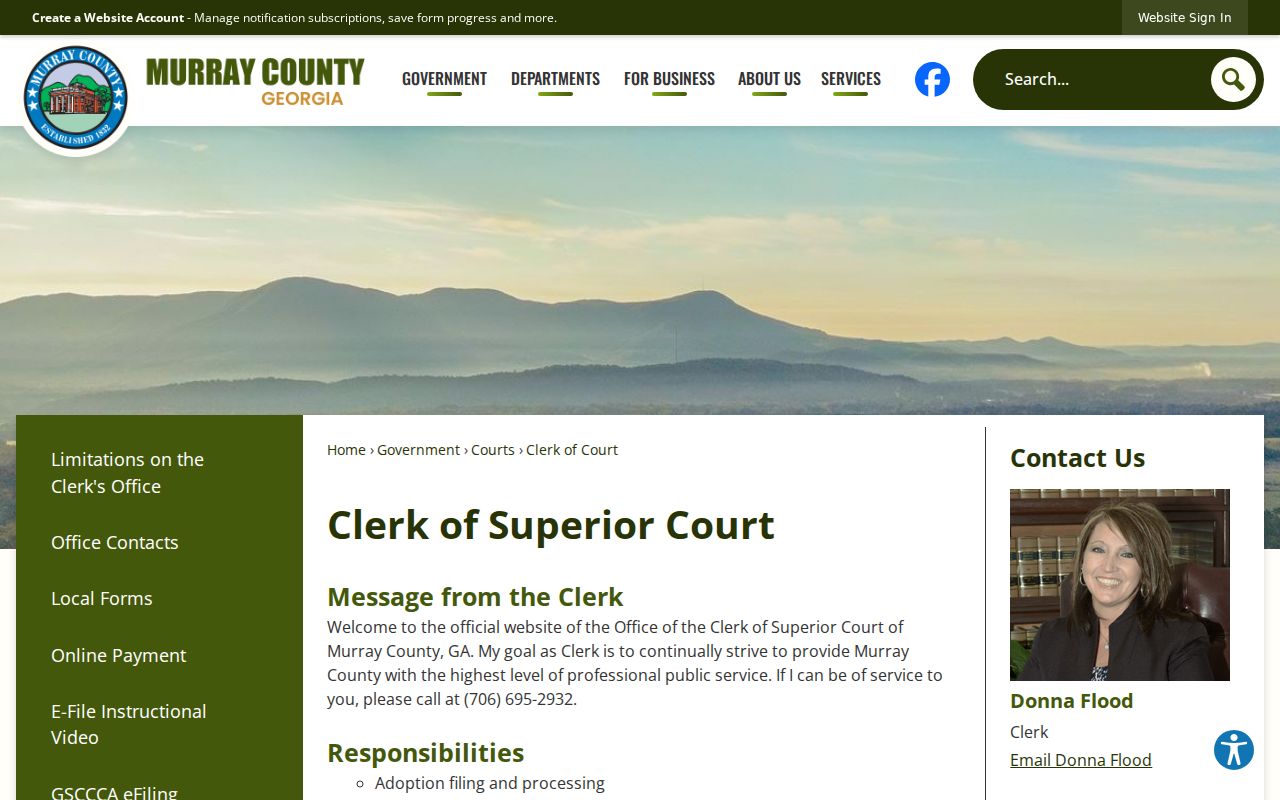
The office screen only routes requests. It posts no public warrant roster and no private warrant record. Murray County does publish official court filing fee information, which lists the costs the clerk charges for filings.
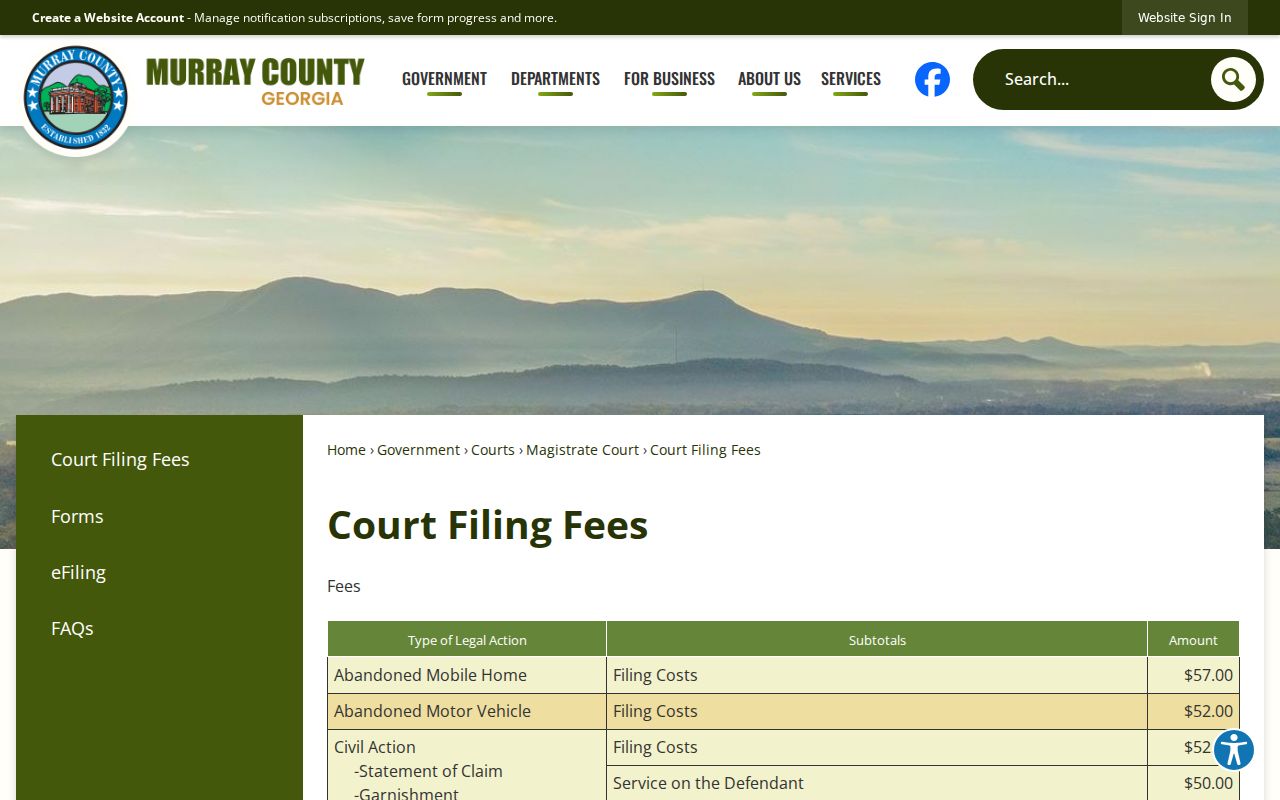
A filing fee is not a bond or a jail charge. Check every warrant-related amount with the issuing court or the detention desk.